It happens every year, yet it remains one of the least understood turning points on Earth’s calendar. March Equinox 2026 will not light up the sky like an eclipse or a meteor shower, but its quiet arrival will mark a precise planetary shift with global scientific meaning.
For most readers, the March equinox is often reduced to a simple phrase: the start of spring in one half of the world and the start of autumn in the other. That description is broadly correct, but it barely captures why the event matters. In astronomy, the equinox is not just a date on the calendar. It is an exact moment when the Sun crosses the celestial equator, creating one of the most important reference points in Earth’s annual motion around the Sun. NASA says the 2026 March equinox occurs on March 20, 2026, at 14:46 UTC.
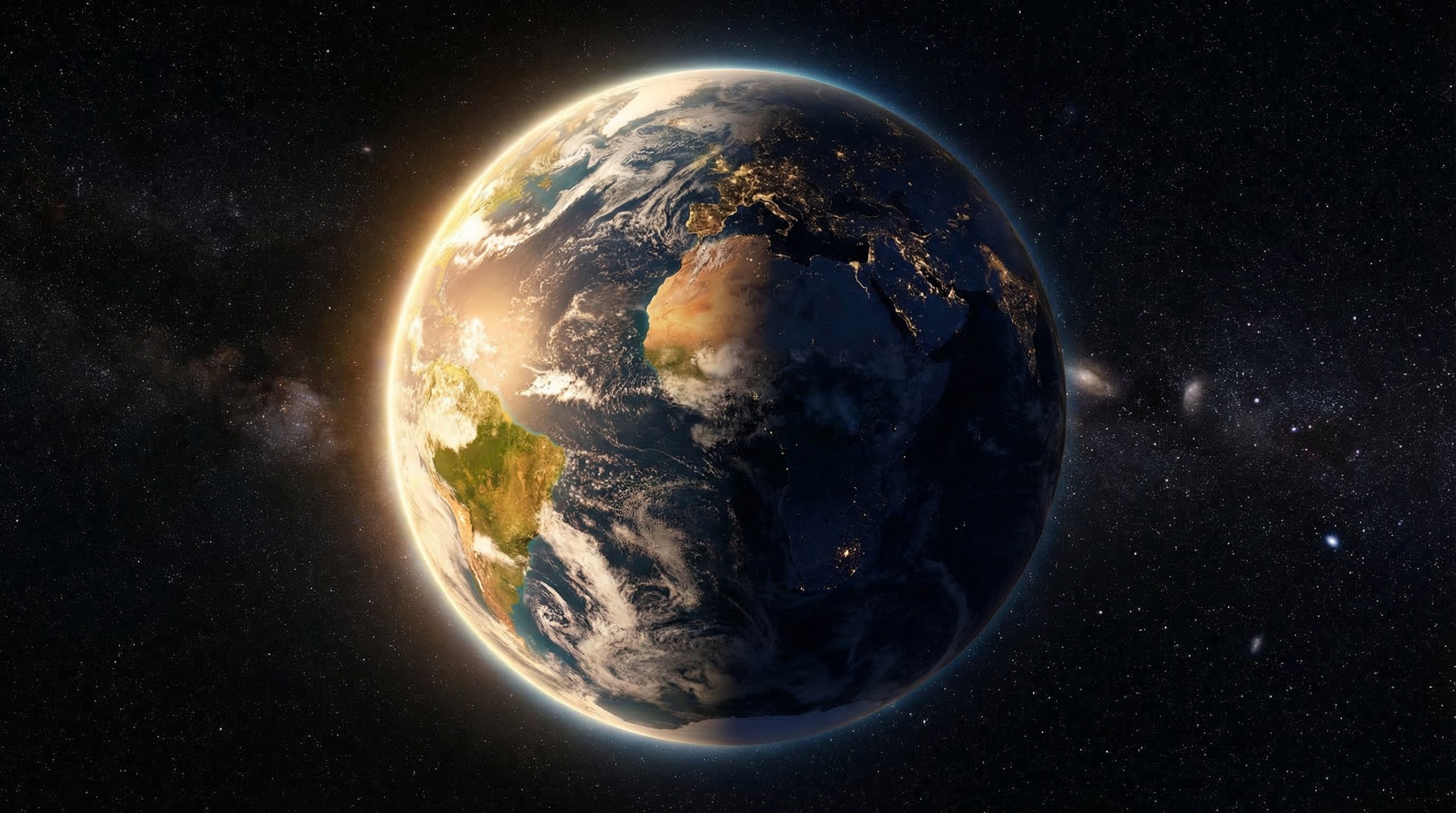
That timestamp matters because international astronomy coverage depends on precision. The equinox is not an all-day phenomenon in the scientific sense. It is a specific instant, measured globally in Coordinated Universal Time, when neither of Earth’s poles is tilted toward or away from the Sun. That geometry is what defines the seasonal transition on a planetary scale. For the Northern Hemisphere, it marks the beginning of astronomical spring. For the Southern Hemisphere, it marks the start of astronomical autumn.
What makes the March equinox especially interesting is how often it is misunderstood. One of the most persistent myths is that the equinox means day and night are exactly equal everywhere on Earth. That is a useful simplification, but not a literal truth. Time and Date notes that many places still receive slightly more than 12 hours of daylight because of atmospheric refraction and the way sunrise and sunset are defined. In other words, the equinox is best understood as a precise astronomical alignment, not a perfect 12-hour split between light and darkness.
That distinction is part of what gives the event its editorial value. Unlike eclipses, which naturally generate attention through dramatic visuals, the equinox is important because of what it represents rather than what it looks like. There is no single bright object to watch. No shadow sweeps across a continent. No meteor streaks through the night. Instead, the event reveals something more fundamental: the exact geometry of Earth’s orbit and axial tilt, expressed through a moment that affects the entire planet at once.
For international audiences, that makes March Equinox 2026 a strong science and calendar story. It is measurable, global, recurring, and directly tied to how seasons are defined in astronomy. It also sits at the intersection of science, timekeeping, education, and public understanding. The event may not deliver spectacle, but it offers something that many headline-driven sky events do not: a chance to explain how Earth actually moves through space, and how that motion shapes daily life in ways most people rarely stop to consider.
The 2026 event also reinforces why UTC remains the most useful editorial standard for this kind of reporting. Because the equinox happens at one exact global moment, local calendar dates and clock times can vary by region, but the scientific event itself does not. That is why March 20, 2026, at 14:46 UTC is the clearest and most internationally consistent reference point for publication, broadcasting, and scientific communication.
In the end, March Equinox 2026 is a reminder that not every major astronomical event announces itself with visual drama. Some of the most important changes in the sky arrive quietly, defined by timing, geometry, and precision. This is one of them. It marks a real shift in Earth’s seasonal cycle, and it does so not with spectacle, but with exactness.