On the evening of March 9, 2026, skywatchers around the world will have the chance to witness a beautiful celestial event known as a planetary conjunction — when two planets appear very close together in the sky from our perspective on Earth.
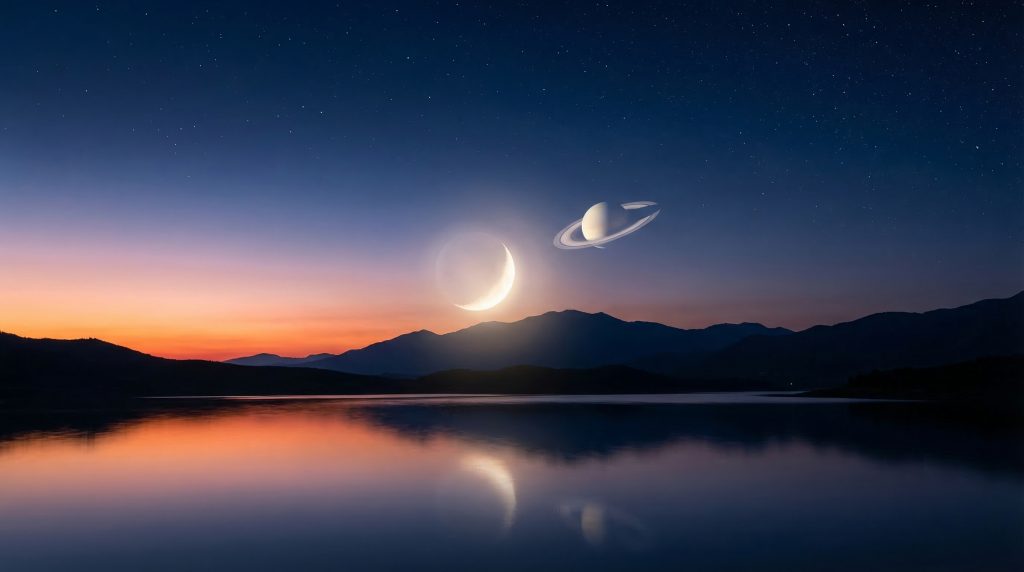
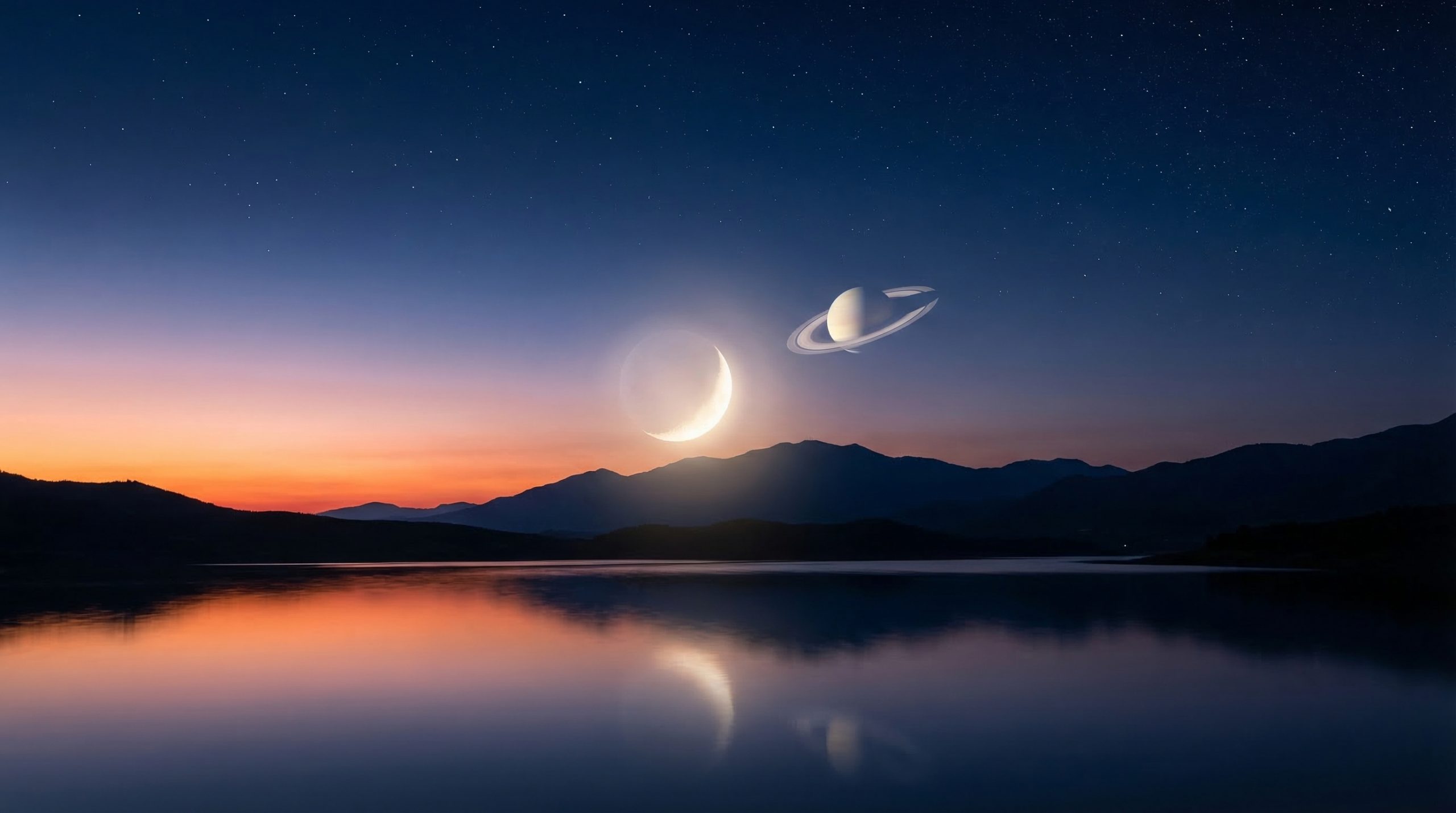
This time, the bright planet Venus will appear right beside the elegant ringed world Saturn, creating a rare and peaceful cosmic pairing visible shortly after sunset. Although these planets are actually separated by hundreds of millions of kilometers in space, they will seem almost side-by-side to observers on Earth.
For anyone who enjoys astronomy or simply loves looking up at the night sky, this is a quiet but stunning moment worth stepping outside for.
What Is the Venus–Saturn Conjunction?
A conjunction occurs when two celestial objects appear near each other in the sky as seen from Earth. This does not mean the planets are physically close in space — it simply means they align along our line of sight.
During this event:
- Venus will shine extremely bright, often called the “Evening Star.”
- Saturn will appear dimmer, glowing with a softer golden light.
- The two planets will appear only a few degrees apart in the twilight sky.
Because Venus is one of the brightest objects in the sky, it will make finding Saturn much easier for observers.
Best Time to Watch
To see the conjunction clearly, timing is important.
Date March 9, 2026
Best Viewing Time
- 30 to 60 minutes after sunset
Visibility
This event will be visible in many parts of the world, especially where skies are clear.
Direction
Look toward the western horizon after the Sun sets.
The sky will still glow slightly with twilight, and two bright “stars” will appear close together. The brighter one will be Venus, and just beside it will be Saturn.
Do You Need a Telescope?
No special equipment is required.
You can easily see the conjunction with the naked eye. However, if you use binoculars or a small telescope, you may notice more detail:
- Venus will appear as a brilliant white disk.
- Saturn may reveal hints of its famous rings through a telescope.
Even with simple binoculars, the view can be breathtaking.
Why This Event Is Special
Planetary conjunctions are gentle reminders of how dynamic our solar system really is. The planets are constantly moving along their orbits, and occasionally their paths align from Earth’s viewpoint.
While conjunctions happen several times each year between different planets, seeing Venus and Saturn together in the twilight sky creates a particularly beautiful contrast:
- Venus: bright, white, and brilliant
- Saturn: softer, golden, and mysterious
Against the fading colors of sunset, the pair can look like two distant lanterns hanging quietly above the horizon.
How to Get the Best View
If you plan to watch the event, here are a few simple tips:
- Find a location with a clear western horizon
- Avoid bright city lights if possible
- Start watching just after sunset
- Bring binoculars for a closer look
- Check the weather forecast for clear skies
Even a few minutes outside can be enough to enjoy this cosmic moment.
A Quiet Reminder to Look Up
Events like this don’t require special preparation, expensive equipment, or travel to distant observatories. Sometimes all it takes is stepping outside, pausing for a moment, and looking up.
On March 9, 2026, as the Sun disappears below the horizon, two distant worlds will appear side by side in the fading light — a gentle reminder that our universe is always moving, always aligning, and always offering something beautiful to see.
So if the sky is clear that evening, take a moment to step outside.
You might just catch Venus and Saturn greeting each other in the twilight sky.