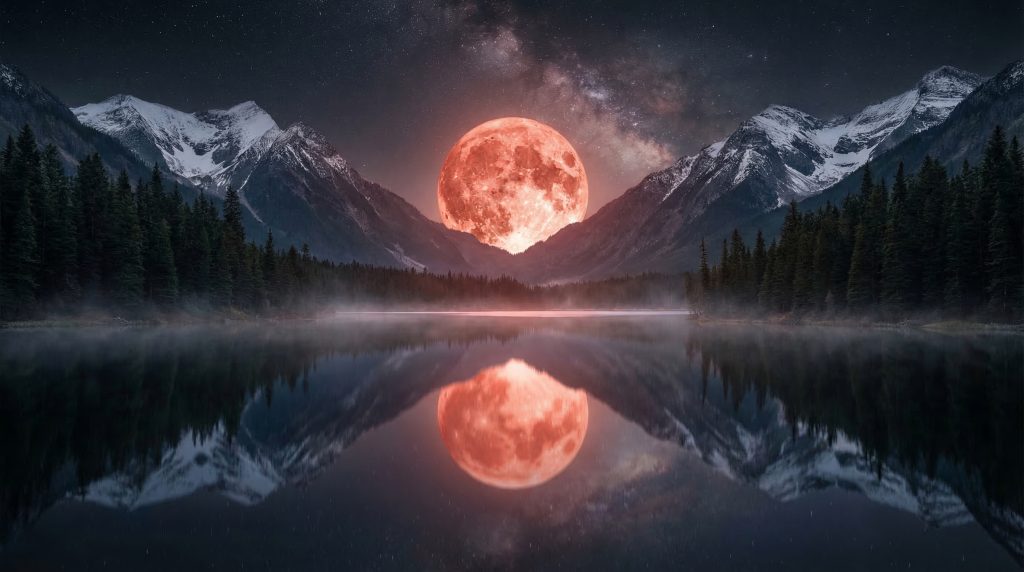
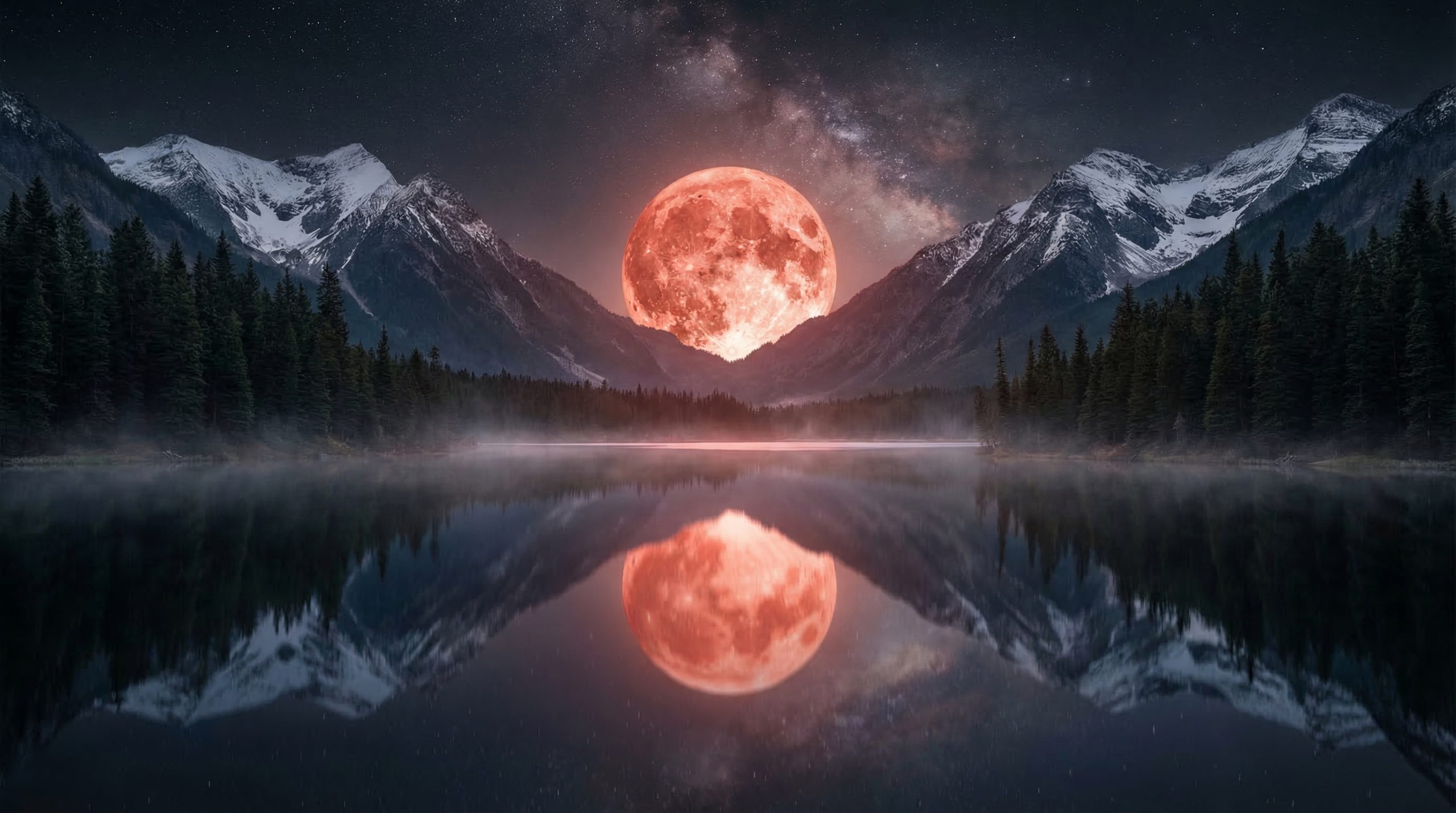
A total lunar eclipse — especially a vivid Blood Moon — offers one of the most dramatic night-sky photography opportunities of the year. Unlike a solar eclipse, it’s completely safe to photograph, giving both beginners and advanced photographers ample time to experiment.
Here’s a practical guide to help you capture it beautifully.
1. Choose the Right Equipment
Camera
- DSLR or mirrorless camera (ideal for manual control)
- Advanced smartphone with manual/night mode (for casual shots)
Lens
- 200mm–600mm telephoto lens for close-up lunar detail
- 70–200mm for wider compositions with landscape
- Wide-angle lens (14–35mm) if you want the Moon rising over a city or landmark
Must-Haves
- Tripod (essential for stability)
- Remote shutter or timer to avoid camera shake
- Extra batteries (long exposure drains power quickly)
2. Camera Settings for a Blood Moon
Because the Moon becomes much darker during totality, your settings must change compared to a normal full Moon.
Before Totality (bright Moon)
- ISO: 100–200
- Aperture: f/8
- Shutter speed: 1/125 to 1/250 sec
During Totality (red Moon)
- ISO: 800–1600 (or higher if needed)
- Aperture: f/5.6–f/8
- Shutter speed: 1–2 seconds
Important: Avoid exposures longer than 2–3 seconds at high zoom, or the Moon may blur due to Earth’s rotation.
3. Add a Foreground for Dramatic Impact
A simple close-up of the Moon is beautiful — but adding a foreground tells a story.
In Western Europe, consider:
- A cathedral silhouette (France, Germany)
- A castle or hilltop village (Spain, Italy)
- A lighthouse along the Atlantic coast (Portugal)
- A modern skyline (London, Amsterdam)
4. Timing Is Everything
Arrive early. The eclipse unfolds gradually:
- Capture the Moon entering Earth’s shadow
- Shoot multiple phases to create a time-lapse composite
- Photograph maximum eclipse for the deepest red tones
Cloud cover forecasts should be checked hours in advance.
5. Enhance Color Naturally
Blood Moon tones vary depending on:
- Atmospheric dust
- Cloud conditions
- Pollution levels
In editing:
- Slightly increase contrast
- Gently enhance warmth
- Avoid oversaturation — keep it natural
The beauty of a Blood Moon lies in its subtle copper and crimson shades.
6. Smartphone Users — Don’t Worry
If using a phone:
- Use Night Mode or Pro Mode
- Stabilize against a solid surface
- Tap to focus on the Moon
- Lower exposure slightly to prevent over-brightness
Zoom quality may be limited, but creative framing can still produce stunning results.
Final Tip: Tell a Story
The best eclipse photos are not just technical — they are emotional.
Include:
- A silhouette of a person watching
- A quiet city under the red Moon
- A calm countryside scene
The Blood Moon is more than an astronomical event — it’s a shared global moment.